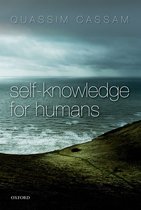
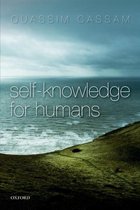
Selfknowledge For Humans
Vraag het Shophulp, de AI-assistent van bol
Auteur:
Uitgever:
EngelsHardcover978019965757527 november 2014238 pagina's
Samenvatting
Humans are not model epistemic citizens. Our reasoning can be careless, our beliefs eccentric, and our desires irrational. Quassim Cassam develops a new account of self-knowledge which recognises this feature of human life. He argues that self-knowledge is a genuine cognitive achievement, and that self-ignorance is almost always on the cards.
Human beings are not model epistemic citizens. Our reasoning can be careless and uncritical, and our beliefs, desires, and other attitudes aren't always as they ought rationally to be. Our beliefs can be eccentric, our desires irrational and our hopes hopelessly unrealistic. Our attitudes are influenced by a wide range of non-epistemic or non-rational factors, including our character, our emotions and powerful unconscious biases. Yet we are rarely conscious of such influences. Self-ignorance is not something to which human beings are immune. In this book Quassim Cassam develops an account of self-knowledge which tries to do justice to these and other respects in which humans aren't model epistemic citizens. He rejects rationalist and other mainstream philosophical accounts of self-knowledge on the grounds that, in more than one sense, they aren't accounts of self-knowledge for humans. Instead he defends the view that inferences from behavioural and psychological evidence are a basic source of human self-knowledge. On this account, self-knowledge is a genuine cognitive achievement and self-ignorance is almost always on the cards. As well as explaining knowledge of our own states of mind, Cassam also accounts for what he calls 'substantial' self-knowledge, including knowledge of our values, emotions, and character. He criticizes philosophical accounts of self-knowledge for neglecting substantial self-knowledge, and concludes with a discussion of the value of self-knowledge. This book tries to do for philosophy what behavioural economics tries to do for economics. Just as behavioural economics is the economics of homo sapiens, as distinct from the economics of an ideally rational homo economicus, so Cassam argues that philosophy should focus on the human predicament rather on the reasoning and self-knowledge of an idealized homo philosophicus.
Human beings are not model epistemic citizens. Our reasoning can be careless and uncritical, and our beliefs, desires, and other attitudes aren't always as they ought rationally to be. Our beliefs can be eccentric, our desires irrational and our hopes hopelessly unrealistic. Our attitudes are influenced by a wide range of non-epistemic or non-rational factors, including our character, our emotions and powerful unconscious biases. Yet we are rarely conscious of such influences. Self-ignorance is not something to which human beings are immune. In this book Quassim Cassam develops an account of self-knowledge which tries to do justice to these and other respects in which humans aren't model epistemic citizens. He rejects rationalist and other mainstream philosophical accounts of self-knowledge on the grounds that, in more than one sense, they aren't accounts of self-knowledge for humans. Instead he defends the view that inferences from behavioural and psychological evidence are a basic source of human self-knowledge. On this account, self-knowledge is a genuine cognitive achievement and self-ignorance is almost always on the cards. As well as explaining knowledge of our own states of mind, Cassam also accounts for what he calls 'substantial' self-knowledge, including knowledge of our values, emotions, and character. He criticizes philosophical accounts of self-knowledge for neglecting substantial self-knowledge, and concludes with a discussion of the value of self-knowledge. This book tries to do for philosophy what behavioural economics tries to do for economics. Just as behavioural economics is the economics of homo sapiens, as distinct from the economics of an ideally rational homo economicus, so Cassam argues that philosophy should focus on the human predicament rather on the reasoning and self-knowledge of an idealized homo philosophicus.
Productspecificaties
Inhoud
- Taal
- en
- Uitvoering
- Hardcover
- Oorspronkelijke releasedatum
- 27 november 2014
- Aantal pagina's
- 238
- Illustraties
- Nee
Betrokkenen
- Hoofdauteur
- Hoofduitgeverij
Informatie over de fabrikant
- Fabrikant Naam
- Oxford University Press España S.A. of El Parque Empresarial
- Fabrikant Adres
- - 28330 - - ES
- E-mailadres of online contactformulier van de fabrikant
- product.safety@oup.com
Overige kenmerken
- Extra groot lettertype
- Nee
- Porno
- Nee
- Product breedte
- 156 mm
- Product hoogte
- 28 mm
- Product lengte
- 234 mm
- Studieboek
- Ja
- Verpakking breedte
- 156 mm
- Verpakking hoogte
- 234 mm
- Verpakking lengte
- 28 mm
- Verpakkingsgewicht
- 636 g
EAN
- EAN
- 9780199657575
Productveiligheid
De verantwoordelijk marktdeelnemer in de EU zorgt voor het nakomen van verplichtingen op het gebied van productveiligheid.
Je vindt dit artikel in
- Categorieën
- Boek, ebook of luisterboek?
- Beschikbaarheid
- Taal
- Type boek
Documenten
Reviews
Nog geen reviews
Kies gewenste uitvoering
Kies je uitvoering
Uiterlijk 6 november in huis
Gratis verzending door bol vanaf 25 euro
Ophalen bij een bol afhaalpunt mogelijk
30 dagen bedenktijd en gratis retourneren via mijn bol
Dag en nacht klantenservice
Doordeweeks ook ’s avonds in huis

Anderen bekeken ook
Bekijk de hele lijst