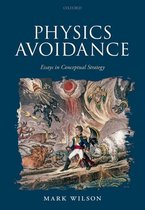
Physics Avoidance and Other Essays in Conceptual Strategy
Vraag het Shophulp, de AI-assistent van bol
Auteur:
Uitgever:
EngelsPaperback978019284935915 september 2021448 pagina's
Samenvatting
Mark Wilson explores our strategies for understanding the world. We frequently cannot reason about nature in the straightforward manner we anticipate, but must use alternative thought processes that reach useful answers in opaque and roundabout ways; and philosophy must find better descriptive tools to reflect this.
Mark Wilson presents a series of explorations of our strategies for understanding the world. 'Physics avoidance' refers to the fact that we frequently cannot reason about nature in the straightforward manner we anticipate, but must seek alternative policies that allow us to address the questions we want answered in a tractable way. Within both science and everyday life, we find ourselves relying upon thought processes that reach useful answers in opaque and roundabout manners. Conceptual innovators are often puzzled by the techniques they develop, when they stumble across reasoning patterns that are easy to implement but difficult to justify. But simple techniques frequently rest upon complex foundations--a young magician learns how to execute a card-guessing trick without understanding how its progressive steps squeeze in on a proper answer. As we collectively improve our inferential skills in this gradually evolving manner, we often wander into unfamiliar explanatory landscapes in which simple words encode physical information in complex and unanticipated ways. Like our juvenile conjurer, we fail to recognize the true strategic rationales underlying our achievements and may turn instead to preposterous rationalizations for our policies. We have learned how to reach better conclusions in a more fruitful way, but we remain baffled by our own successes. At its best, philosophical reflection illuminates the natural developmental processes that generate these confusions and explicates their complexities. But current thinking within philosophy of science and language works to opposite effect by relying upon simplistic conceptions of 'cause', 'law of nature', 'possibility', and 'reference' that ignore the strategic complexities in which these concepts become entangled within real-life usage. To avoid these distortions, better descriptive tools are wanted. The nine new essays within this volume illustrate this need for finer discriminations through a range of revealing cases, of both historical and contemporary significance.
Mark Wilson presents a series of explorations of our strategies for understanding the world. 'Physics avoidance' refers to the fact that we frequently cannot reason about nature in the straightforward manner we anticipate, but must seek alternative policies that allow us to address the questions we want answered in a tractable way. Within both science and everyday life, we find ourselves relying upon thought processes that reach useful answers in opaque and roundabout manners. Conceptual innovators are often puzzled by the techniques they develop, when they stumble across reasoning patterns that are easy to implement but difficult to justify. But simple techniques frequently rest upon complex foundations--a young magician learns how to execute a card-guessing trick without understanding how its progressive steps squeeze in on a proper answer. As we collectively improve our inferential skills in this gradually evolving manner, we often wander into unfamiliar explanatory landscapes in which simple words encode physical information in complex and unanticipated ways. Like our juvenile conjurer, we fail to recognize the true strategic rationales underlying our achievements and may turn instead to preposterous rationalizations for our policies. We have learned how to reach better conclusions in a more fruitful way, but we remain baffled by our own successes. At its best, philosophical reflection illuminates the natural developmental processes that generate these confusions and explicates their complexities. But current thinking within philosophy of science and language works to opposite effect by relying upon simplistic conceptions of 'cause', 'law of nature', 'possibility', and 'reference' that ignore the strategic complexities in which these concepts become entangled within real-life usage. To avoid these distortions, better descriptive tools are wanted. The nine new essays within this volume illustrate this need for finer discriminations through a range of revealing cases, of both historical and contemporary significance.
Productspecificaties
Inhoud
- Taal
- en
- Uitvoering
- Paperback
- Oorspronkelijke releasedatum
- 15 september 2021
- Aantal pagina's
- 448
- Illustraties
- Nee
Betrokkenen
- Hoofdauteur
- Hoofduitgeverij
Informatie over de fabrikant
- Fabrikant Naam
- Oxford University Press España S.A. of El Parque Empresarial
- Fabrikant Adres
- San Fernando de Henares, Avenida de Castilla, 2 – 28830 Madrid - 28330 - Madrid - ES
- E-mailadres of online contactformulier van de fabrikant
- product.safety@oup.com
Overige kenmerken
- Product breedte
- 171 mm
- Product hoogte
- 22 mm
- Product lengte
- 246 mm
- Studieboek
- Nee
- Verpakking breedte
- 171 mm
- Verpakking hoogte
- 22 mm
- Verpakking lengte
- 246 mm
- Verpakkingsgewicht
- 850 g
EAN
- EAN
- 9780192849359
Productveiligheid
De verantwoordelijk marktdeelnemer in de EU zorgt voor het nakomen van verplichtingen op het gebied van productveiligheid.
Je vindt dit artikel in
- Categorieën
- Boek, ebook of luisterboek?
- Beschikbaarheid
- Taal
- Type boek
Documenten
Reviews
Nog geen reviews
Kies gewenste uitvoering
Kies je uitvoering
Verwacht over 3 weken
Prijs inclusief verzendkosten, verstuurd door bol
Ophalen bij een bol afhaalpunt mogelijk
30 dagen bedenktijd en gratis retourneren via mijn bol
Dag en nacht klantenservice
Doordeweeks ook ’s avonds in huis