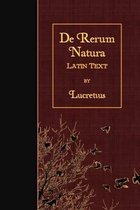
De Rerum Natura (The Nature Of Things) A Poetic Translation
Auteur:
Uitgever:
Vertaald door:
EngelsPaperback978052025593706 augustus 2008301 pagina's

Lucretius
"Titus Lucretius Carus (/ˈtaɪtəs ljuːˈkriːʃəs/; c. 15 October 99 BC – c. 55 BC) was a Roman poet and philosopher. His only known work is the philosophical poem De rerum natura, a didactic work about the tenets and philosophy of Epicureanism, and which is usually translated into English as On the Nature of Things. Lucretius has been credited with originating the concept of the three-age system which was formalised from 1834 by C. J. Thomsen.
(Bron: Wikipedia. Beschikbaar onder de licentie Creative Commons Naamsvermelding/Gelijk delen.)"
Alles van Lucretius(Bron: Wikipedia. Beschikbaar onder de licentie Creative Commons Naamsvermelding/Gelijk delen.)"
Samenvatting
Presents a readable translation of a poem that is crucial to the history of ancient thought. This title offers an elaboration of Greek Epicurean physics and psychology. It argues that the soul is mortal, that pleasure is the object of life, and that humanity has free will, among other ideas.
This elegant new translation at last restores the poetry to one of the greatest and most influential poems in the Western tradition. "De Rerum Natura" is Lucretius' majestic elaboration of Greek Epicurean physics and psychology in an epic that unfolds over the course of six books. This sumptuous account of a secular cosmos argues that the soul is mortal, that pleasure is the object of life, and that humanity has free will, among other ideas. Renowned author, translator, and poet David R. Slavitt has captured Lucretius' elegance as well as his philosophical profundity in this highly readable translation of a poem that is crucial to the history of ancient thought.
This elegant new translation at last restores the poetry to one of the greatest and most influential poems in the Western tradition. "De Rerum Natura" is Lucretius' majestic elaboration of Greek Epicurean physics and psychology in an epic that unfolds over the course of six books. This sumptuous account of a secular cosmos argues that the soul is mortal, that pleasure is the object of life, and that humanity has free will, among other ideas. Renowned author, translator, and poet David R. Slavitt has captured Lucretius' elegance as well as his philosophical profundity in this highly readable translation of a poem that is crucial to the history of ancient thought.
Productspecificaties
Inhoud
- Taal
- en
- Uitvoering
- Paperback
- Oorspronkelijke releasedatum
- 06 augustus 2008
- Aantal pagina's
- 301
- Illustraties
- Nee
Vertaling
- Eerste Vertaler
Informatie over de fabrikant
- Fabrikantgegevens
- De informatie van de fabrikant is momenteel niet beschikbaar.
Overige kenmerken
- Extra groot lettertype
- Nee
- Product breedte
- 140 mm
- Product hoogte
- 19 mm
- Product lengte
- 210 mm
- Studieboek
- Nee
- Verpakking breedte
- 141 mm
- Verpakking hoogte
- 25 mm
- Verpakking lengte
- 208 mm
- Verpakkingsgewicht
- 427 g
EAN
- EAN
- 9780520255937
Productveiligheid
De verantwoordelijk marktdeelnemer in de EU zorgt voor het nakomen van verplichtingen op het gebied van productveiligheid.
Je vindt dit artikel in
Documenten
Reviews
Nog geen reviews
Kies gewenste uitvoering
Kies je uitvoering
Uiterlijk 4 november in huis
Gratis verzending door bol vanaf 25 euro
Ophalen bij een bol afhaalpunt mogelijk
30 dagen bedenktijd en gratis retourneren via mijn bol
Dag en nacht klantenservice
Doordeweeks ook ’s avonds in huis
Bekijk ook eens


Anderen bekeken ook
Bekijk de hele lijst